Showing posts with label history of pop music. Show all posts

Saturday, May 10, 2008

we all want to change the world


Joe Boyd, Robin Denselow, Sukhdev Sandhu @ Royal Festival Hall, 9th May.

There's an extensive programme of events in London at the moment to commemorate the various political upheavals of May 1968 in France, the US, Czechoslovakia, Mexico and even the little old UK.

Tonight's event discusses the part music played in these different political contexts. There are plenty of examples of the extent to which this was the case: at the height of the Vietnam War Hendrix imitates gunfire in his Woodstock rendition of the "Star Splangled Banner"; there is a burgeoning radical arts movement in Prague, sadly soon to be quashed by Soviet tanks; music plays an important part in the US civil rights movement, in 1968 at crisis point after the assassination of Martin Luther King; Caetano Veloso and Gilberto Gil are main movers in the Tropicalia movement in Brazil; the Rolling Stones release of "Street Fighting Man" coincides with violent Anti-Vietnam demonstrations in London.

Joe Boyd, the main contributor tonight, is convinced that music has lost its political power, claiming that nowadays any new musical genre which sets out to shock and subvert is soon appropriated by the media, becomes a "brand" and often even acquires a commercial sponsor. Interestingly one audience member recalls the Laurie Anderson gig a week ago where several people walked out supposedly objecting to Anderson's anti-American stance. Maybe there is still a place for politics in music, and vice versa...

Read more:
- A chronology of the main events of the year
- A review of Joe Boyd's book White Bicycles: Making Music in the 1960s
- Peter Wilby writes in this week's New Statesman
- "Revolution 1968: politics and culture united" (Socialist Worker)
- "Year the music died" (David Aaronovitch, Observer)

Sunday, March 30, 2008

france v england

"Sweet Is The Song": Catherine Bott @ The Purcell Room, 30th March

Shirley Collins, an important figure in English folk music over the last fifty years, has been responsible for putting on a series of concerts at the Southbank Centre this week. In this last-but-one in the series fellow-singer and friend Catherine Bott, sang some songs from Collins's repertoire * along with some French medieval love songs from her own album "Sweet Is The Song". The French songs, in their sparse, unaccompanied form were quite difficult to come to terms with on an initial hearing but the English ones, accompanied by David McGuinness's chamber organ, were easier to size up.

Collins herself was on hand to give some interesting historical background: some of the songs were collected by Vaughan Williams in the early 1900s, others were passed down to her by her own grandparents in West Sussex; two of them lamented the young men of the villages of Southern England, taken away by press gangs to fight in the Napoleonic wars.

Quite an enjoyable selection and always good to broaden horizons a bit but this gig was really one for the folk aficionado and no doubt that there were plenty of those in the audience. As with the jazz at the Bulls Head last week, it's interesting to see another example of the many different music communities which exist in the UK. **

* Songs from the repertoire of Shirley Collins, arranged by Dolly Collins:
** See also What Happened to Radio 2?

Wednesday, March 19, 2008

frith street

Simon Frith is a renowned academic in the field of pop music--there aren't many academics who get an entry in Wikipedia, a prolific author (count the fifty titles of his listed on Amazon) and probably best known in non-academic circles as the chairman of the jury for the annual Mercury Music Prize. Royal Holloway College recently hired him to give a series of free lectures at the British Library on "Rock and British Musical Culture 1955-2005".

Interesting stuff. This is my feeble attempt to summarise pretty randomly some of the ideas and themes which came to light:

- Conventional accounts of the history of pop music should be challenged: they're often based on newspaper stories which are likely to recount single events rather give an accurate overview. For example, accepted wisdom is that the punk era was the first to inspire large numbers of British youth to get involved in music-making. In fact, of far more significance in this respect were the late 1950s, when a revival in trad jazz and the advent of rock and roll (under the influence of Elvis, Bill Haley et al) and skiffle (Lonnie Donegan) combined to much greater effect.

- In the 1950s, musical criticism in the popular press was concerned only with classical music; pop was seen as unimportant, ephemeral, and part of the light entertainment industry. It was the advent of the rock/pop album which effected a change in this respect. Frank Sinatra's 1950s Capitol recordings ("In the Wee Small Hours of the Morning", "Come Fly With Me") were the first "themed" albums, but until the early sixties, most long-playing records were little more than a collection of two- or three-minute singles. Here, as in many areas, the Beatles were hugely influential: albums like Sgt Pepper were produced as entities in themselves, with a carefully sequenced tracklists and cleverly designed cover packaging. The pop album became a work of art in itself. Ironically, just as pop had done earlier, classical music in recent years, particularly in the popular media, has embraced a "star system" of its own (Nigel Kennedy, Katherine Jenkins, classical "boy bands" Il Divo and G4).

- The musician's role has changed significantly in the pop era. In the 1950s being a musician--whether in an orchestra or a dance band--would have meant taking lessons, spending long hours practising on one's chosen instrument, learning to read music and to play on sight, possibly taking exams. The pop musician's route to success is likely to have been much shorter and less arduous: perhaps learning his craft by listening to records and observing other players, though developing no smaller area of expertise. Further developments in more recent years--both in the recording studio and in the composition and performance of the music (scratching, sampling, DJing)--have blurred the lines between musician and engineer.

- Notions of authenticity and artistic integrity are often important concerns of followers of established pop and rock artists: the need to be true to their style and their fanbase and not pandering to commerciality ("selling out"). At the same time, everywhere in pop music there are examples of stylistic pastiche. Artists draw on the styles of previous eras but bring something of themselves to the music. For example, in Teenage Fanclub's version of "Hey Mr Tambourine Man" a Scottish indie guitar band acknowledges its debt to the guitar style and close harmony vocals of the Byrds; Primal Scream's "Movin' On Up" pays tribute to the Rolling Stones, "Brimful of Asha" by Cornershop combines elements of British and Pakistani pop music. By this token, even artists on TV talent shows like the "X-Factor" can be said to have some merit.

- Finally, an interesting insight into the work of the Mercury jury. The panel is presented with a shortlist of twelve albums, but in deciding on a winner of this annual award for the best in British music, the judges consider at some length the degree to which the albums can be said to represent Britishness and produce a "British sound", for example in terms of...
  • content: music should be "about" Britain in some way, possibly drawing on some shared idea of the British past, as with the Kinks, Sgt Pepper, Blur, the Smiths and Madness. Recent winners the Arctic Monkeys and Dizzee Rascal are good examples of "something which Americans wouldn't get",
  • form (given that musical styles are likely to have their origins in African/American music to greater or lesser extent),
  • representativeness and
  • sensibility (sense of their audience, context).

Further up Frith Street:

Interviews from...

Wednesday, January 18, 2006

another day on earth

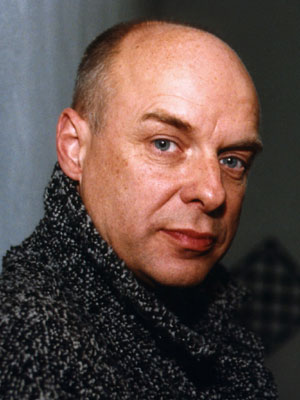
The Centre for Contemporary Music Cultures at Goldsmiths had its first guest speaker last night: Brian Peter St. John Le Baptiste de la Salle Eno, composer, video artist, record producer, sound engineer, prolific musical collaborator, recording artist in his own right, etc etc. Quite a coup to get him to come along and talk to us and obviously much for him to talk to us about. Predictably, he didn't dish much dirt about Bowie's cocaine-fuelled excesses or those marathon sex sessions with Roxy Music groupies. The most gossip we got was his story about going back to his flat in Maida Vale with Talking Heads in the late seventies and playing them records by Fela Kuti, who he thought was the future of pop music. Talking Heads agreed, apparently.

Not surprisingly, there's already lots of stuff on the internet about him and his varied career but here's a list of some of the topics he touched on in his hour and a half with us, along with links to some sites which go into a bit more detail:

- Generative music (which he claimed to have invented although a lot of the contemporary music crowd at Goldsmiths were of the view that other composers did this before, or better than, Eno);
- "Ambient" music ("Music for Airports" et al);
- Songwriting (This quote seems to sum up at least some of what he was saying about this: "... if you think of a piece of music like a landscape, you’re free to think what you want about it; it’s about you, the listener. But as soon a figure appears in that landscape [the singer, for example], that figure becomes the center of attention and directs your thoughts. No longer is the music about the listener, but about the composer [or the singer, presumably].")
- The Portsmouth Sinfonia in which he "played" the clarinet;
- The "Oblique Strategies" cards

Some sites with more info about Eno:
- the BBC music and wikipedia sites: good starting points;
- the "Independent on Sunday"'s 50th birthday tribute: interesting, detailed but readable;
- the "official" Enoweb site - extensive (often huge) lists of his recordings, interviews and books about him and his work.