 Last night I went to the BFI to see Paul Kelly's new documentary "Lawrence of Belgravia".
The eponymous Lawrence (his surname is never used) is difficult to pin down: certainly eccentric, sometimes funny (wittingly or unwittingly), generally not particularly likeable though endearing on occasions, above all optimistically single-minded in a search for pop stardom which, to those looking on, seems doomed to failure.
Erstwhile lead singer of eighties jangly indie darlings Felt and nineties glam rockers Denim, these days Lawrence fronts the novelty synth-pop outfit Go Kart Mozart. In one of a series of interviews shown during the film, he claims that he's now "legally bonkers". Fleeting shots of methadone prescriptions and arrest warrants in his name suggest he might be right.
If he seems a bit at sea these days, that doesn't mean that some of the music he made all those years ago wasn't pretty fine:
Last night I went to the BFI to see Paul Kelly's new documentary "Lawrence of Belgravia".
The eponymous Lawrence (his surname is never used) is difficult to pin down: certainly eccentric, sometimes funny (wittingly or unwittingly), generally not particularly likeable though endearing on occasions, above all optimistically single-minded in a search for pop stardom which, to those looking on, seems doomed to failure.
Erstwhile lead singer of eighties jangly indie darlings Felt and nineties glam rockers Denim, these days Lawrence fronts the novelty synth-pop outfit Go Kart Mozart. In one of a series of interviews shown during the film, he claims that he's now "legally bonkers". Fleeting shots of methadone prescriptions and arrest warrants in his name suggest he might be right.
If he seems a bit at sea these days, that doesn't mean that some of the music he made all those years ago wasn't pretty fine:
Showing posts with label films and music. Show all posts
Showing posts with label films and music. Show all posts
Friday, October 28, 2011
song of the week 36: felt - sunlight bathed the golden glow
Last night I went to the BFI to see Paul Kelly's new documentary "Lawrence of Belgravia".
The eponymous Lawrence (his surname is never used) is difficult to pin down: certainly eccentric, sometimes funny (wittingly or unwittingly), generally not particularly likeable though endearing on occasions, above all optimistically single-minded in a search for pop stardom which, to those looking on, seems doomed to failure.
Erstwhile lead singer of eighties jangly indie darlings Felt and nineties glam rockers Denim, these days Lawrence fronts the novelty synth-pop outfit Go Kart Mozart. In one of a series of interviews shown during the film, he claims that he's now "legally bonkers". Fleeting shots of methadone prescriptions and arrest warrants in his name suggest he might be right.
If he seems a bit at sea these days, that doesn't mean that some of the music he made all those years ago wasn't pretty fine:


Friday, May 13, 2011
song of the week 19: bud powell - bouncin' with bud
Been "doing some jazz" this week, thanks to a visit to Ronnie Scott's to listen to the most excellent resident band performing various Count Basie goodies. The whole of the 1957 Atomic Mr Basie album (a.k.a. "E=mc²") got a good airing as did several of the songs from the Sinatra at the Sands album--recorded with the 1966 Basie big band line-up--Iain Mackenzie stepping up for vocal duties on "Come Fly With Me", "I've Got You Under My Skin" and a few others.
This week's musical gem though comes courtesy not of Basie, nor Sinatra, but of pianist Bud Powell whose Blue Note "Best Of" album is one I've been dipping into lately.
Powell led a troubled life. He was horribly beaten on the head by racist police in his late teens and consequently suffered bad headaches and mental illness until his untimely death at the age of forty-one. His style was hugely influential: he abandoned the "stride" technique which had been prevalent in piano jazz up until then and began instead to use the left hand to play only sparse accompanying chords. He also occasionally drew on influences from classical music, as on the Side Two opener "Bud on Bach".
In Bertrand Tavernier's 1986 film Around Midnight, Dexter Gordon plays a character who is partly modelled on Powell. The movie is based on the true-life story of the friendship between Powell and Parisian jazz fan Francis Paudras. This trailer is a bit cheesy but it gives a flavour of some of the great music in the film. It's well worth seeing if you haven't done so already...
This week's musical gem though comes courtesy not of Basie, nor Sinatra, but of pianist Bud Powell whose Blue Note "Best Of" album is one I've been dipping into lately.
Powell led a troubled life. He was horribly beaten on the head by racist police in his late teens and consequently suffered bad headaches and mental illness until his untimely death at the age of forty-one. His style was hugely influential: he abandoned the "stride" technique which had been prevalent in piano jazz up until then and began instead to use the left hand to play only sparse accompanying chords. He also occasionally drew on influences from classical music, as on the Side Two opener "Bud on Bach".
In Bertrand Tavernier's 1986 film Around Midnight, Dexter Gordon plays a character who is partly modelled on Powell. The movie is based on the true-life story of the friendship between Powell and Parisian jazz fan Francis Paudras. This trailer is a bit cheesy but it gives a flavour of some of the great music in the film. It's well worth seeing if you haven't done so already...
Track One on the "Best Of Bud Powell" album is an upbeat number and features Sonny Rollins on tenor sax and Fats Navarro on trumpet. Enjoy...
Monday, January 31, 2011
song of the week 5: john barry (1933-2011) - the ipcress file
Well not exactly a song this week...
Saint Etienne's Bob Stanley, who knows about these things, says it all much better than I can. He's right for example that Barry was the epitome of sixties London: "He shared a flat with Michael Caine, married Jane Birkin, and owned a pad in super-hip Cadogan Square."
And then there were the tunes of course: the unexpected chord changes and the distinctive arranging style, both of which have been massively influential on musicians of the last fifty years.
Spoilt for choice as I am, I'm going to plump for his score for this classic film starring his erstwhile flatmate...
More Guardian stuff here and here.
RIP JB.
Saint Etienne's Bob Stanley, who knows about these things, says it all much better than I can. He's right for example that Barry was the epitome of sixties London: "He shared a flat with Michael Caine, married Jane Birkin, and owned a pad in super-hip Cadogan Square."
And then there were the tunes of course: the unexpected chord changes and the distinctive arranging style, both of which have been massively influential on musicians of the last fifty years.
Spoilt for choice as I am, I'm going to plump for his score for this classic film starring his erstwhile flatmate...
More Guardian stuff here and here.
RIP JB.
Tuesday, May 11, 2010
umbrellas, windmills...
Sunday's visit to the BFI to see Agnès Varda's "New Wave classic" "Cléo de 5 à 7" reminded me again how many great songs in French films of the sixties were written by Michel Legrand. He was a hugely prolific film composer around this time--I seem to vaguely remember that he was even one of Parky's chat show regulars in his own pre-Bublé heyday.
Legrand actually has quite an impressive jazz pedigree, having briefly collaborated with Miles Davis, John Coltrane and Bill Evans in the 1950s, but it's for his film music that he's best known. In the mid sixties, he composed scores for a number of films directed by Varda's husband Jacques Demy, most notably "Les Parapluies de Cherbourg" starring Catherine Deneuve. The film's "sung-through" dialogue might not be to everyone's taste, but any sucker for big tunes with sweeping melodies (don't think I'm on my own here) ought to have a soft spot for "I Will Wait For You"...
...Just when you think you're at full tilt another soaring key change shifts you again up yet another gear. (The song returns dramatically in the final scene. I suppose you could just click on the YouTube link to view this one clip, but it's much more worthwhile working your way up to it through the rest of the film.)
By the time "Les Parapluies" appeared in 1964, Legrand had already scored nearly thirty French films including "Cléo de 5 à 7" in which he also makes more than a cameo appearance. (Corinne Marchand's performance of "Sans Toi" is worth a listen too). Deneuve's starring role, the tragically romantic storyline, the impressive photography, as well as Legrand's score, all helped to win "Les Parapluies" an amount of international success and an Oscar nomination. The resulting flood of offers from Hollywood kept Legrand in filmscore work until as late as 1995.
Although I'd argue that it didn't quite hit the peaks of his early scores for the likes of Demy and Varda, his Hollywood output did have some high points, like Noel (Son of Rex) Harrison's only hit record, from the 1968 film "The Thomas Crown Affair". This is Michel's own "version française"...
Legrand actually has quite an impressive jazz pedigree, having briefly collaborated with Miles Davis, John Coltrane and Bill Evans in the 1950s, but it's for his film music that he's best known. In the mid sixties, he composed scores for a number of films directed by Varda's husband Jacques Demy, most notably "Les Parapluies de Cherbourg" starring Catherine Deneuve. The film's "sung-through" dialogue might not be to everyone's taste, but any sucker for big tunes with sweeping melodies (don't think I'm on my own here) ought to have a soft spot for "I Will Wait For You"...
...Just when you think you're at full tilt another soaring key change shifts you again up yet another gear. (The song returns dramatically in the final scene. I suppose you could just click on the YouTube link to view this one clip, but it's much more worthwhile working your way up to it through the rest of the film.)
By the time "Les Parapluies" appeared in 1964, Legrand had already scored nearly thirty French films including "Cléo de 5 à 7" in which he also makes more than a cameo appearance. (Corinne Marchand's performance of "Sans Toi" is worth a listen too). Deneuve's starring role, the tragically romantic storyline, the impressive photography, as well as Legrand's score, all helped to win "Les Parapluies" an amount of international success and an Oscar nomination. The resulting flood of offers from Hollywood kept Legrand in filmscore work until as late as 1995.
Although I'd argue that it didn't quite hit the peaks of his early scores for the likes of Demy and Varda, his Hollywood output did have some high points, like Noel (Son of Rex) Harrison's only hit record, from the 1968 film "The Thomas Crown Affair". This is Michel's own "version française"...
Friday, April 09, 2010
the art of the understatement
It's generally agreed that a period beginning roughly in the early 1940s and ending in the mid-1960s constituted the golden age of the musical. Also during this time many of the "songs from the shows" became a staple part of the jazz repertoire, for both singers and instrumentalists, and this continues to be the case where modern-day artists are concerned. It seems strange that this is so. Aren't these songs rather outmoded now? Aren't they representative of different, perhaps more innocent, times? What's more, if greats like Fitzgerald and Sinatra recorded definitive versions in the forties and fifties, why invite comparison with them by re-recording these songs decades later?
That's not to say there aren't worthy re-interpretations by modern-day artists, maybe in interesting new styles or arrangements, and perhaps these songs are anyway still worthy of a place alongside original compositions but there's sometimes a tendency to wonder, well, if it hasn't all been done before.
At it's worst, this phenomenon can be very bad indeed. In my view, Michael Parkinson's reputation as a broadcaster has almost entirely been shot down in flames since he has begun championing peddlers of lazy cover versions of showtunes. Watch, if you dare, this nauseating clip of two grinning backslappers in a "Parkinson Music Special" (sic) last year. Brace yourself:
BBC4 has a a season of programmes at present on what is known as the "Great American Songbook" (we don't have one of these in the UK, by the way). There have been concerts by a number of greats like Nina Simone, Tony Bennett and Ella Fitzgerald as well as series of documentaries "charting the evolution of pop from Tin Pan Alley to today's billion-dollar industry" and, this evening, a selection of songs from the films of Ginger Rogers and Fred Astaire.
Strictly speaking, the films of Rogers and Astaire at RKO appeared before our "golden age of the musical" during a period when the Nazi war machine was clicking into gear in Europe, and although these were little more than fluffy, "screwball" affairs, many of the great American songwriters were contracted to write the music: Cole Porter to "The Gay Divorcee" (1934), Irving Berlin to "Top Hat" (1935), Jerome Kern to "Swing Time" (1936) and George and Ira Gershwin to "Shall We Dance" (1937).
Of course, it's for their dancing which Rogers and Astaire are best known, but their singing style is also an important part of the charm of these films. Neither of them has the strongest voice but their pitch, even on the high notes, is always spot on. It's just what these songs need. They don't have the overblown drama of operatic arias, but they do have witty wordplay, clever rhymes and unexpected and subtle melodic flourishes. The words become so much more meaningful by virtue of being understated.
Towards the end of "Shall We Dance", the characters played by Astaire and Rogers meet at the dockside. Having divorced for the sake of appearances and their showbusiness careers and now on the point of parting forever, they realise that they are in love with each other after all. "They Can't Take That Away From Me" is his remembrance of their time together.
The song, here in its original arrangement, has none of theswinging, almost jaunty, swagger of later interpretations, just a gentle string and horn accompaniment as perfect complement to Astaire's unfussy singing style. It may be a screwball comedy, but the line "The way you changed my life" with its final melodic up-turn followed by the close-up of Rogers's crying face I think is a genuinely touching moment. But then I'm just a big softie...
That's not to say there aren't worthy re-interpretations by modern-day artists, maybe in interesting new styles or arrangements, and perhaps these songs are anyway still worthy of a place alongside original compositions but there's sometimes a tendency to wonder, well, if it hasn't all been done before.
At it's worst, this phenomenon can be very bad indeed. In my view, Michael Parkinson's reputation as a broadcaster has almost entirely been shot down in flames since he has begun championing peddlers of lazy cover versions of showtunes. Watch, if you dare, this nauseating clip of two grinning backslappers in a "Parkinson Music Special" (sic) last year. Brace yourself:
BBC4 has a a season of programmes at present on what is known as the "Great American Songbook" (we don't have one of these in the UK, by the way). There have been concerts by a number of greats like Nina Simone, Tony Bennett and Ella Fitzgerald as well as series of documentaries "charting the evolution of pop from Tin Pan Alley to today's billion-dollar industry" and, this evening, a selection of songs from the films of Ginger Rogers and Fred Astaire.
Strictly speaking, the films of Rogers and Astaire at RKO appeared before our "golden age of the musical" during a period when the Nazi war machine was clicking into gear in Europe, and although these were little more than fluffy, "screwball" affairs, many of the great American songwriters were contracted to write the music: Cole Porter to "The Gay Divorcee" (1934), Irving Berlin to "Top Hat" (1935), Jerome Kern to "Swing Time" (1936) and George and Ira Gershwin to "Shall We Dance" (1937).
Of course, it's for their dancing which Rogers and Astaire are best known, but their singing style is also an important part of the charm of these films. Neither of them has the strongest voice but their pitch, even on the high notes, is always spot on. It's just what these songs need. They don't have the overblown drama of operatic arias, but they do have witty wordplay, clever rhymes and unexpected and subtle melodic flourishes. The words become so much more meaningful by virtue of being understated.
Towards the end of "Shall We Dance", the characters played by Astaire and Rogers meet at the dockside. Having divorced for the sake of appearances and their showbusiness careers and now on the point of parting forever, they realise that they are in love with each other after all. "They Can't Take That Away From Me" is his remembrance of their time together.
The song, here in its original arrangement, has none of the
Monday, September 28, 2009
dancing in the street
It's now twenty years since Spike Lee's "Do The Right Thing" was released. I was lucky enough to see it again at the BFI a couple of weeks ago. It's got some great music.
How are these for opening titles which blow you out of your seat?
Reckon it's a sample of this JB song:
How are these for opening titles which blow you out of your seat?
Reckon it's a sample of this JB song:
Wednesday, April 15, 2009
scaffolding
At the BFI this month, they've got a season of films from the French New Wave of the late 1950s and early 60s. On Friday I went to see Louis Malle's "Lift to the Scaffold" which was released in 1958. It's got a great (improvised) Miles Davis soundtrack...
Hear the rest of it here...
Monday, March 23, 2009
there's a boat that's leaving soon for new york...
...well it's actually Virgin Atlantic Flight VS001, but I'll be on it.
Off the top of my head, a few songs about or from the City Which Never Sleeps...
- Rhapsody In Blue: George Gershwin (see below)
- Take The "A" Train: Duke Ellington & Ella Fitzgerald
- Walk On The Wild Side: Lou Reed
- Life During Wartime: Talking Heads
- Hanging On The Telephone: Blondie
- 12:51: The Strokes
- Spanish Harlem: Aretha Franklin
- Say It Loud, I'm Black And I'm Proud: James Brown
- Fight The Power: Public Enemy
- New Amsterdam: Elvis Costello
- American Tune: Paul Simon
- Living It Up: Rickie Lee Jones
- New York State Of Mind: Billy Joel
- Hey Manhattan: Prefab Sprout
See you on East 17th Street...
Monday, May 22, 2006
the sound of the suburbs
"Moro no Brasil: the sound of Brazil" (2002), screened as part of the Barbican's "Tropicalia" film season, is a travelogue of Brazilian music narrated and directed by Finnish film director Mika Kaurismaki. Beginning in the musically diverse regions of the north-east of the country (Bahia and Pernambuco), it features many performances by local groups ranging from indigenous ritual ceremonies to teenage street rappers. Moving down to Rio, the film covers some of the same ground as "Favela Rising" depicting the shanty town dwellers who rise above poverty and drug dealing by playing in local music groups. There are echoes of Wim Wenders' "Buena Vista Social Club" when Kausimaki interviews Walter Alfaiate, an elderly singing tailor. He also talks to singer Margaret Menezes and Seu Jorge (link) too features at some length and there is a fantastic scene near the end in which favelistas dance on the rooftops to some James Brown funk.
More info about the film.
More info about the film.
Friday, March 17, 2006
sound and vision
Some interesting stuff on the TV, radio and at the cinema this week for the aspiring ethnomusicologist:
- a Channel 5 programme about folk music in the North East of England featuring Kathryn Tickell, Northumbrian piper and fiddler, and showing some of her work as a teacher in Northumbrian schools. It's great that people like this are doing something to preserve this music and pass it on to future generations. Interesting that you can now do a degree in folk and traditional music at Newcastle University, apparently the first course of its kind in the UK.
- then I put the radio on. "The Organist Entertains" really is a remnant from a bygone age, with a selection of tunes played on huge theatre and cinema organs. Amazing to think there is still such a community of enthusiasts out there and credit to Radio 2 for continuing to put the show on, another example music of the past being preserved.
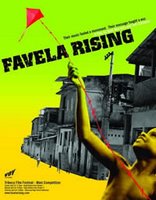
- then later in the week I saw "Favela Rising" at the cinema. Anderson Sa and his band, Afro-Reggae, have done fantastic work in recent years in the favelas/shanty towns of Rio by getting youngsters involved in music- making and offering them an alternative to a life of crime mixed up with the local drugs trade. Now signed to a record label and touring in Brazil and overseas (recently opening the Barbican's current "Tropicalia" season), the band have ploughed all royalties back into the favelas. It'll be interesting to see if their international success cuts them off from their roots at all as time goes on.
More about the rise of Afro-Reggae.
- a Channel 5 programme about folk music in the North East of England featuring Kathryn Tickell, Northumbrian piper and fiddler, and showing some of her work as a teacher in Northumbrian schools. It's great that people like this are doing something to preserve this music and pass it on to future generations. Interesting that you can now do a degree in folk and traditional music at Newcastle University, apparently the first course of its kind in the UK.
- then I put the radio on. "The Organist Entertains" really is a remnant from a bygone age, with a selection of tunes played on huge theatre and cinema organs. Amazing to think there is still such a community of enthusiasts out there and credit to Radio 2 for continuing to put the show on, another example music of the past being preserved.
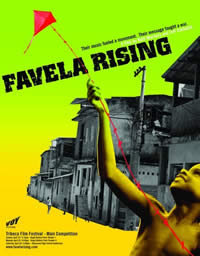
- then later in the week I saw "Favela Rising" at the cinema. Anderson Sa and his band, Afro-Reggae, have done fantastic work in recent years in the favelas/shanty towns of Rio by getting youngsters involved in music- making and offering them an alternative to a life of crime mixed up with the local drugs trade. Now signed to a record label and touring in Brazil and overseas (recently opening the Barbican's current "Tropicalia" season), the band have ploughed all royalties back into the favelas. It'll be interesting to see if their international success cuts them off from their roots at all as time goes on.
More about the rise of Afro-Reggae.
Subscribe to:
Posts (Atom)